When gold and bonds failed, energy became the real safe haven. How Datt Capital's absolute return fund repositioned toward ASX refiners and thermal coal.
~ 5 min. read
By: Datt Capital

There is a reasonable assumption embedded in most portfolios: that certain assets will provide stability when conditions deteriorate. Government bonds. Gold. Defensive equities. For much of the past four decades, reaching for these instruments during periods of uncertainty has been broadly rewarded.
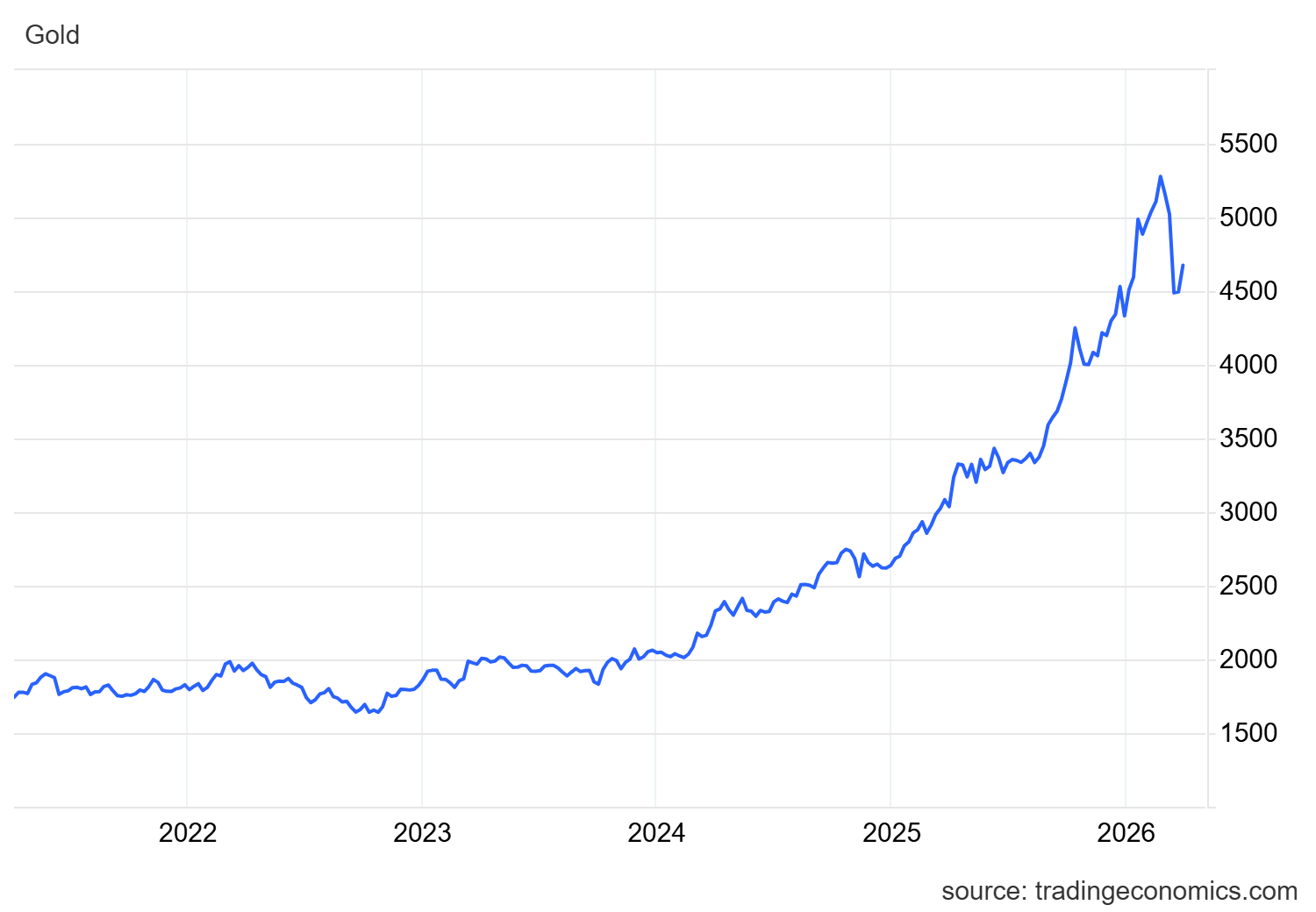
The Middle East conflict tests that assumption directly. As hostilities intensify and supply routes come under pressure, gold sold off. Bond yields rose sharply. The assets that were supposed to dampen portfolio volatility did the opposite. Investors who had positioned defensively through conventional means found themselves exposed in ways they had not anticipated.
At Datt Capital, our response was to go back to first principles. What does this environment actually reward? Where does genuine risk asymmetry exist for investors willing to look past the consensus?
Gold and government bonds function as safe havens under specific conditions. They benefit when investors seek capital preservation, when inflation expectations are anchored, and when the dominant risk is financial rather than physical. Those conditions held for most of the post-GFC period, which is why the conventional playbook became so entrenched.
The Middle East conflict introduces a different category of risk. The disruption is physical, not financial. Energy inputs, fertiliser supply, and critical commodity flows that originate from or transit through the region come under sustained pressure. That creates supply-driven inflationary dynamics, and the distinction matters.
In a supply-driven inflation environment, bonds struggle because real yields compress against rising price pressures. Gold faced its own headwinds. Energy is a material input cost for gold mining. Rising fuel costs compress mining margins, and the market priced that in rationally. The asset the market was ultimately repricing toward was energy itself. Capital was flowing to the commodity that sits at the base of the productive economy.
Identifying energy as the real beneficiary of this environment was the straightforward part. The more consequential decision was how to gain that exposure in a manner consistent with our risk management discipline.
Direct exposure to spot oil prices carried a specific set of risks we were not comfortable absorbing. The influence of algorithmic and systematic trading on front-month commodity contracts had grown considerably. Price movements increasingly reflected sentiment signals and positioning dynamics rather than supply fundamentals. Accepting that kind of volatility in exchange for commodity exposure was not a trade we wanted to make.
Our preference was for intermediary exposures with more stable return profiles and clearer near-term catalysts. For Australian markets, that led us to the two ASX-listed refiners: Ampol and Viva Energy. Between them, these businesses produce approximately 20% of Australia's domestic fuel consumption. Their economics are linked to Singaporean crack spreads, which measure the margin between crude input costs and refined product output. When the physical supply of petroleum products tightens, crack spreads widen and refinery returns improve.
The positioning also carried a sovereign support rationale. Domestic refining capacity is a matter of genuine national strategic importance. A government facing fuel supply pressure has a strong incentive to support the economics of domestic production. That support materialised, and the speed and clarity of the policy response were encouraging.
The risk asymmetry is reasonably clear. If the conflict is resolved quickly, physical supply normalisation would still take several months, sustaining elevated crack spreads through that period. If the conflict extends, the duration of elevated returns extends with it.
Our thermal coal holdings through New Hope and Yancoal reflected similar structural reasoning. Both companies operate predominantly on Australia's east coast, and that geographic positioning carries real relevance in a constrained fuel environment.
East coast mining operations have materially better access to the domestic fuel supply than remote operations in Western Australia. In scenarios where diesel availability tightens, proximity to supply chains provides a genuine operational advantage. This is the kind of idiosyncratic factor that broad sector analysis tends to overlook but that matters considerably at the company level. It is also the kind of insight that primary research surfaces where consensus analysis does not.
Australia's resource endowment and institutional framework also make it a structurally attractive destination for global energy capital, particularly when supply security is front of mind for importing nations across Asia. The demand backdrop for Australian thermal coal had not deteriorated. What had changed was the urgency with which buyers sought supply certainty.
We incorporated the royalty regime changes introduced in certain states into our analysis. The conclusion was that net economics remained favourable for the assets we held, given their low-cost operating profiles and long asset life.
Throughout this period, we reduced positions that did not fit the thesis, even where our medium-term fundamental view on those holdings remained positive. Gold exposure was trimmed. Technology positions were reduced. In a period of genuine binary risk, portfolio clarity and liquidity matter more than retaining every conviction.
Cash was raised as an active portfolio decision. We hold cash when the risk-adjusted return of deploying it does not meet our threshold, and we deploy it with conviction when that threshold is clearly met. Maintaining dry powder in this environment was the more disciplined choice.
This reflects a broader principle in how we think about portfolio construction at Datt Capital. Volatility is a source of opportunity, but only for investors who have positioned themselves to act on it. A portfolio that is fully deployed at the moment of maximum dislocation has no capacity to respond. Patient capital is prepared capital.
The Middle East conflict offers a useful stress test for conventional portfolio thinking. The assets that were supposed to provide protection did not. The commodity at the base of the global economic system became the real flight to safety. Investors who adapted their frameworks quickly, rather than relying on historical correlations that the environment had broken, were better positioned for what followed.
For long-term investors, the lesson is that safe haven status is contextual, not permanent. The conditions under which any asset performs its intended function need to be assessed continuously. Market structures evolve. Policy settings shift. Capital flow dynamics change.
Our role as an independent investment fund manager in Australia is to assess those conditions as they are, construct portfolios that reflect the actual risk landscape, and maintain the discipline to act on independent analysis when the evidence points away from consensus.
That process, applied consistently across market cycles, is what we believe drives durable, risk-adjusted outcomes for our investors.
Datt Capital manages the Datt Absolute Return Fund and the Datt Small Companies Fund. For wholesale investors seeking to understand our investment philosophy and approach to portfolio construction, further information is available at datt.com.au.
An absolute return fund targetspositive returns across different market conditions rather than tracking abenchmark index. During geopolitical crises, the fund actively manages exposure— increasing cash, reducing positions that no longer fit the thesis, androtating toward assets with genuine risk asymmetry. The objective is topreserve capital first and deploy it with conviction when the evidence isclear.
Gold and bonds function as safehavens when the dominant risk is financial and inflation expectations areanchored. The Middle East conflict introduced a supply-driven inflationarydynamic — a physical disruption rather than a financial one. In that environment,rising fuel costs compressed gold mining margins, and bond yields rose sharplyagainst price pressures, causing both assets to underperform their defensivepurpose.
Rather than taking directexposure to spot commodity prices — which carry significant algorithmic andsentiment-driven volatility — Datt Capital's absolute return fund usedintermediary exposures with more stable return profiles. This meant positionsin ASX-listed refiners Ampol and Viva Energy, whose economics are linked toSingaporean crack spreads, and thermal coal producers New Hope and Yancoal witheast coast logistics advantages.
A crack spread is the marginbetween the cost of crude oil inputs and the revenue from refined petroleumproducts. Singaporean crack spreads are the relevant benchmark for Australiandomestic refiners. When physical supply of refined products tightens — asoccurs during major supply disruptions — crack spreads widen and refineryreturns improve, directly supporting the earnings of Ampol and Viva Energy.
Datt Capital's absolute returnportfolio is constructed around first-principles assessment of where genuinerisk asymmetry exists. This means actively managing cash as a real allocation,sizing positions according to conviction and downside risk, avoiding structuralexposure to volatile commodity contracts, and maintaining the discipline toreduce positions that no longer fit the thesis even when medium-termfundamental views remain positive.
Q: How does Datt Capitalapproach capital preservation in a managed fund?
Capital preservation at DattCapital begins with downside assessment before upside assessment for everyposition. Cash is held when the risk-adjusted return of deploying it does notmeet the required threshold. During periods of maximum uncertainty, maintainingliquidity protects the compounding base and ensures the portfolio can respondto dislocations rather than being a forced seller at the wrong moment.
Disclaimer: This article does not take into account your investment objectives, particular needs or financial situation; and should not be construed as advice in any way. The author may hold stocks discussed in this article. Forward-looking statements reflect the author's views at the time of writing and are subject to change. Past performance is not indicative of future results.

Investment Excellence with a Proven Edge
Datt Capital Pty Ltd
ABN 37 124 330 865
AFSL 542100
390 St Kilda Rd, Melbourne VIC 3004
© COPYRIGHT 2025. ALL RIGHTS RESERVED.
Datt Capital Pty Ltd
ABN 37 124 330 865
AFSL 542100
390 St Kilda Rd, Melbourne VIC 3004
© COPYRIGHT 2026. ALL RIGHTS RESERVED.
The information on this website is prepared and issued by Datt Capital Pty Ltd (ABN 37 124 330 865 AFSL 542100) (Datt Capital). Unless otherwise stated, the information is intended for wholesale clients within the meaning of section 761G or 761GA of the Corporations Act 2001 (Cth) (Corporations Act).
Datt Capital is the investment manager of the Datt Capital Absolute Return Fund (APIR FHT3309AU), the Datt Small Companies Fund Class A (APIR FHT4217AU), and the Datt Small Companies Fund Class B (APIR FHT4217AU) (together, the Funds). Fundhost Limited (ABN 69 092 517 087 AFSL 233045) (Fundhost) is the issuer and trustee of each Fund.
The Datt Capital Absolute Return Fund and the Datt Small Companies Fund Class A are available to wholesale investors only and must not be made available to any persons that are "retail clients" for the purpose of the Corporations Act. An investment in either of these Funds is available directly through a valid application form attached to the relevant information memorandum, through the Olivia123 direct application platform, or through selected investor directed portfolio service (IDPS) platforms. Before making any decision to make or hold any investment in either Fund you should consider the relevant information memorandum in full. The Datt Small Companies Fund Class B is available to retail investors only, exclusively through selected investor directed portfolio service (IDPS) platforms. Before making any decision to make or hold any investment in this Fund you should consider the relevant Product Disclosure Statement (PDS) in full. The PDS is available on request by contacting Datt Capital directly.
The information contained on this website or in any email is not intended for distribution to, or use by, any person or entity in any jurisdiction or country where such distribution or use would be contrary to law or regulation, or which would subject Datt Capital or Fundhost to any registration or other requirement within such jurisdiction or country. Datt Capital may provide general information to help you understand our investment approach. Any financial advice we provide has not considered your personal circumstances and may not be suitable for you. To the extent permitted by law, Datt Capital and Fundhost, their officers, employees, consultants, advisers and authorised representatives, are not liable for any loss or damage arising as a result of any reliance placed on this document. Information has been obtained from sources believed to be reliable, but we do not represent it is accurate or complete, and it should not be relied upon as such. Datt Capital and Fundhost do not guarantee investment performance or distributions, and the value of your investment may rise or fall. Past performance is not an indicator of future performance.