Rising interest rates are reshaping ASX small caps. Emanuel Datt on capital discipline, energy sector positioning, and what this means for small cap fund investors
~ 4 min. read
By: Datt Capital

Key Takeaways:
Interest rates are reshaping behaviour across equity markets. In Australian small caps, the effect is direct and immediate. Capital is no longer abundant, and the cost of funding now influences every allocation decision. This environment favours businesses with discipline, liquidity, and clear valuation support.
Higher rates compress valuation multiples and reduce tolerance for speculative growth. Historically, periods of rising interest rates have coincided with weaker small cap performance and greater dispersion in returns across Australian small cap funds. Over time, this dispersion increases and the gap widens between businesses with strong balance sheets and internal cash generation and those without. Higher rates compress valuation multiples and reduce tolerance for speculative growth. Rising interest rates have historically coincided with periods of weaker small cap performance and greater dispersion in returns.
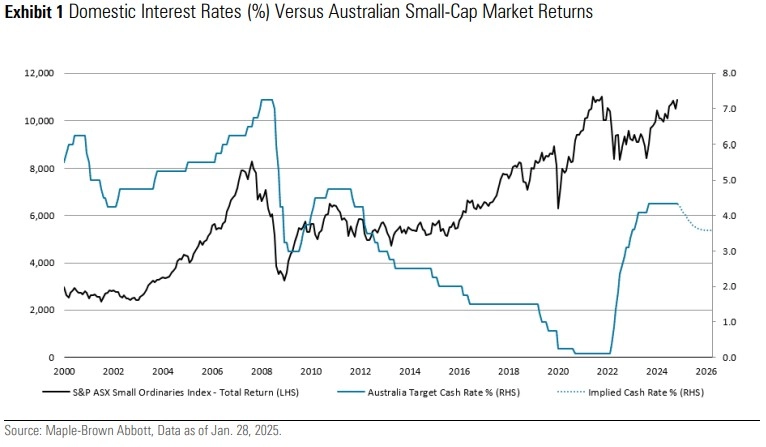
Management teams must now prioritise return on capital above volume. Projects that once proceeded under optimistic assumptions are now subject to stricter hurdle rates. This support smore sustainable earnings profiles and reduces capital misallocation over time.
These dynamics were recently discussed by Datt Capital's CIO, Emanuel Datt, in an interview with Ausbiz. Emanuel outlined how rising rates are influencing capital allocation across ASX small caps, while highlighting the role of energy markets in shaping current opportunity sets.
For investors assessing a small companies fund in Australia, this shift reinforces the importance of selectivity, balance sheet strength, and capital preservation.
Watch the full interview below:
Within this context, the energy sector presents a distinct opportunity set. Structural demand and constrained supply, driven by geopolitical tensions, trade disruptions, and a renewed focus on energy security across developed economies, continue to support the sector.
Australia is well positioned within this framework. A stable legal environment, a deep resource base, and proximity to Asian demand centres continue to attract capital flows into energy-related assets. For investors in Australian small cap funds, this reinforces the relevance of energy exposure as part of a diversified portfolio, particularly where earnings are grounded in real economy demand rather than sentiment.
Australia's remaining refinery capacity, represented by Ampol and Viva Energy, holds strategic importance within the domestic energy system. These assets supply a meaningful portion of domestic fuel demand and operate within a regional pricing framework linked to Singapore crack spreads.
As Emanuel Datt noted: "These refinery assets have proven to be critical for Australia's energy security. They provide somewhere in the region of 20 to 25% of Australia's domestic fuel consumption."
Recent supply disruptions have widened refining margins, supporting earnings for operators with direct exposure to these spreads. While refining remains cyclical, integrated retail networks provide a stabilising base for cash flow across the cycle.
"Margins are heavily correlated with Singaporean oil cracks, being the spread between refined products and crude oil. We have seen these spreads blow out significantly with supply interruptions, and we expect a strong earnings uplift," Emanuel noted.
From a portfolio construction perspective, assets with pricing leverage and essential service characteristics tend to maintain relevance across market cycles, supporting both earnings resilience and valuation stability.
Thermal coal markets reflect a related dynamic. Supply constraints in key exporting regions, combined with elevated LNG pricing, have supported demand for alternative energy sources.
New Hope Corporation (ASX: NHC) carries exposure to seaborne coal markets that continue to reflect tight supply conditions. When LNG availability is constrained or pricing rises, power generation shifts toward thermal coal, reinforcing demand through direct substitution.
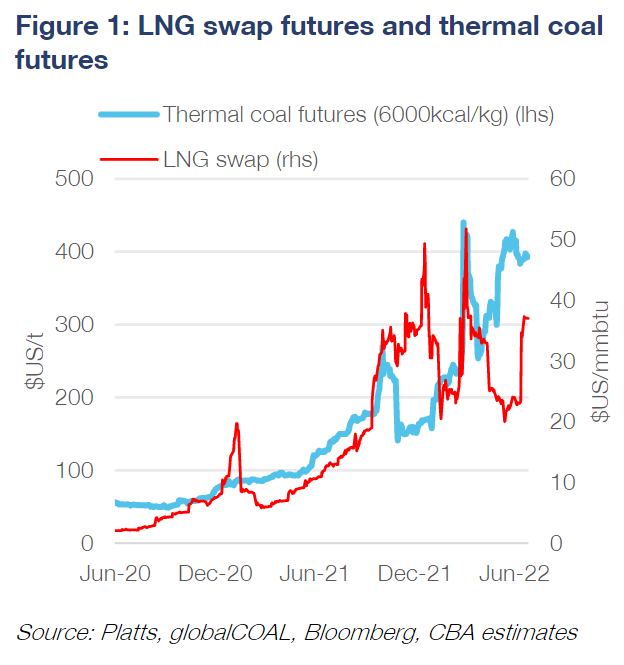
A similar relationship has been observed during prior periods of energy market disruption. Earnings in these environments are often driven by second-order effects rather than the initial disruption itself, particularly in interconnected energy supply chains. For investors in small company investment funds in Australia, understanding these substitution dynamics is part of identifying where value is actually forming.
The Australian small cap segment remains inefficient, particularly during periods of market dislocation. Price discovery often lags underlying fundamentals, creating opportunities for investors with a disciplined, research-led process.
“Rising interest rates can be important for capital discipline, in the sense that decisions made by companies have a real hurdle rate attached.” - says Emanuel Datt.
Selectivity is central to navigating this environment. Businesses with strong liquidity, asset backing, and clear earnings visibility are better positioned when funding conditions tighten. Companies reliant on continuous capital raising face increasing pressure as that access narrows.
For investors assessing undervalued stocks in Australia, this reinforces the importance of focusing on idiosyncratic drivers rather than broad market narratives.
"As an investor, in a rising interest rate cycle, you want to focus on small caps demonstrating adequate organic growth. Higher quality compounders are what you should be looking for in the small cap arena," Emanuel added.
Capital preservation remains a priority. Liquidity provides optionality, particularly in volatile markets where opportunities emerge unevenly. Holding cash is an active portfolio decision, allowing investors to deploy capital when valuations reflect genuine risk asymmetry.
An absolute return approach, focused on downside risk management and selective opportunity capture, is well suited to this environment. It supports participation in sectors with structural support, such as energy, while maintaining discipline across the broader portfolio.
Over time, markets separate durable business models from those dependent on favourable conditions. Periods of adjustment accelerate that process.
Energy exposure, when grounded in valuation and supported by structural demand, contributes to portfolio resilience. It aligns with inflation dynamics, global supply constraints, and essential economic activity.
For investors in Australia, the energy sector offers structural tailwinds, earnings visibility, and real asset exposure that grows more relevant as capital becomes more selective about where it flows.
Investors seeking to understand how these themes are applied within an investment manager in Australia can explore our investment philosophy, Absolute Return Fund, and Small Companies Fund on our website.
Rising interest rates compress valuation multiples on growth stocks, increase financing costs for businesses with floating-rate debt, and reduce capital market access for companies reliant on equity raises. In the small-cap segment, these effects are more pronounced because smaller businesses typically have less pricing power, thinner liquidity, and less diversified revenue than large caps. The result is greater dispersion in returns and higher rewards for selectivity.
A resilient small companies fund in a rising-rate environment holds businesses with low or manageable debt, strong internal cash generation, genuine pricing power, and idiosyncratic earnings drivers that are not dependent on a low-rate assumption. Avoiding businesses that require continuous capital raising and maintaining liquidity as an active portfolio tool are equally important to navigating rate cycles without permanent capital impairment.
The Australian energy sector benefits from structural supply constraints, elevated global demand, and Australia's proximity to Asian import markets. Domestic refining assets operated by Ampol and Viva Energy provide crack spread-linked earnings that widen when physical supply tightens. Thermal coal producers like New Hope face demand support from LNG price substitution in power generation. These drivers are largely independent of the domestic rate cycle.
A crack spread is the price margin between crude oil input costs and the sale price of refined fuel products such as diesel and petrol. For Australian refiners Ampol and Viva Energy, earnings are closely correlated with Singaporean crack spreads. When global fuel supply tightens, as occurs during major supply disruptions, crack spreads widen materially, directly lifting refinery profitability.
Datt Capital's selection process begins with primary research conducted independently of broker consensus. The team assesses business quality, balance sheet strength, competitive positioning, and downside risk before evaluating upside. Ideas are drawn from a broad research programme covering regulatory filings, industry networks, academic sources, and quantitative screening. Positions are sized according to conviction and risk asymmetry, not index weighting.
Investing in a small-cap fund in Australia provides managed diversification, professional research capability, and active risk management across a portfolio of small companies. Direct investment in individual ASX small caps requires the investor to assess each business independently, manage position sizing, and respond to corporate events without institutional-grade research infrastructure. For most investors, a well-managed fund provides better access to the small-cap opportunity set.
Disclaimer: This article does not take into account your investment objectives, particular needs or financial situation; and should not be construed as advice in any way. The author may hold stocks discussed in this article. Forward-looking statements reflect the author's views at the time of writing and are subject to change. Past performance is not indicative of future results.

Investment Excellence with a Proven Edge
Datt Capital Pty Ltd
ABN 37 124 330 865
AFSL 542100
390 St Kilda Rd, Melbourne VIC 3004
© COPYRIGHT 2025. ALL RIGHTS RESERVED.
Datt Capital Pty Ltd
ABN 37 124 330 865
AFSL 542100
390 St Kilda Rd, Melbourne VIC 3004
© COPYRIGHT 2026. ALL RIGHTS RESERVED.
The information on this website is prepared and issued by Datt Capital Pty Ltd (ABN 37 124 330 865 AFSL 542100) (Datt Capital). Unless otherwise stated, the information is intended for wholesale clients within the meaning of section 761G or 761GA of the Corporations Act 2001 (Cth) (Corporations Act).
Datt Capital is the investment manager of the Datt Capital Absolute Return Fund (APIR FHT3309AU), the Datt Small Companies Fund Class A (APIR FHT4217AU), and the Datt Small Companies Fund Class B (APIR FHT4217AU) (together, the Funds). Fundhost Limited (ABN 69 092 517 087 AFSL 233045) (Fundhost) is the issuer and trustee of each Fund.
The Datt Capital Absolute Return Fund and the Datt Small Companies Fund Class A are available to wholesale investors only and must not be made available to any persons that are "retail clients" for the purpose of the Corporations Act. An investment in either of these Funds is available directly through a valid application form attached to the relevant information memorandum, through the Olivia123 direct application platform, or through selected investor directed portfolio service (IDPS) platforms. Before making any decision to make or hold any investment in either Fund you should consider the relevant information memorandum in full. The Datt Small Companies Fund Class B is available to retail investors only, exclusively through selected investor directed portfolio service (IDPS) platforms. Before making any decision to make or hold any investment in this Fund you should consider the relevant Product Disclosure Statement (PDS) in full. The PDS is available on request by contacting Datt Capital directly.
The information contained on this website or in any email is not intended for distribution to, or use by, any person or entity in any jurisdiction or country where such distribution or use would be contrary to law or regulation, or which would subject Datt Capital or Fundhost to any registration or other requirement within such jurisdiction or country. Datt Capital may provide general information to help you understand our investment approach. Any financial advice we provide has not considered your personal circumstances and may not be suitable for you. To the extent permitted by law, Datt Capital and Fundhost, their officers, employees, consultants, advisers and authorised representatives, are not liable for any loss or damage arising as a result of any reliance placed on this document. Information has been obtained from sources believed to be reliable, but we do not represent it is accurate or complete, and it should not be relied upon as such. Datt Capital and Fundhost do not guarantee investment performance or distributions, and the value of your investment may rise or fall. Past performance is not an indicator of future performance.